
Table Of Contents
Ameya Marie Okamoto
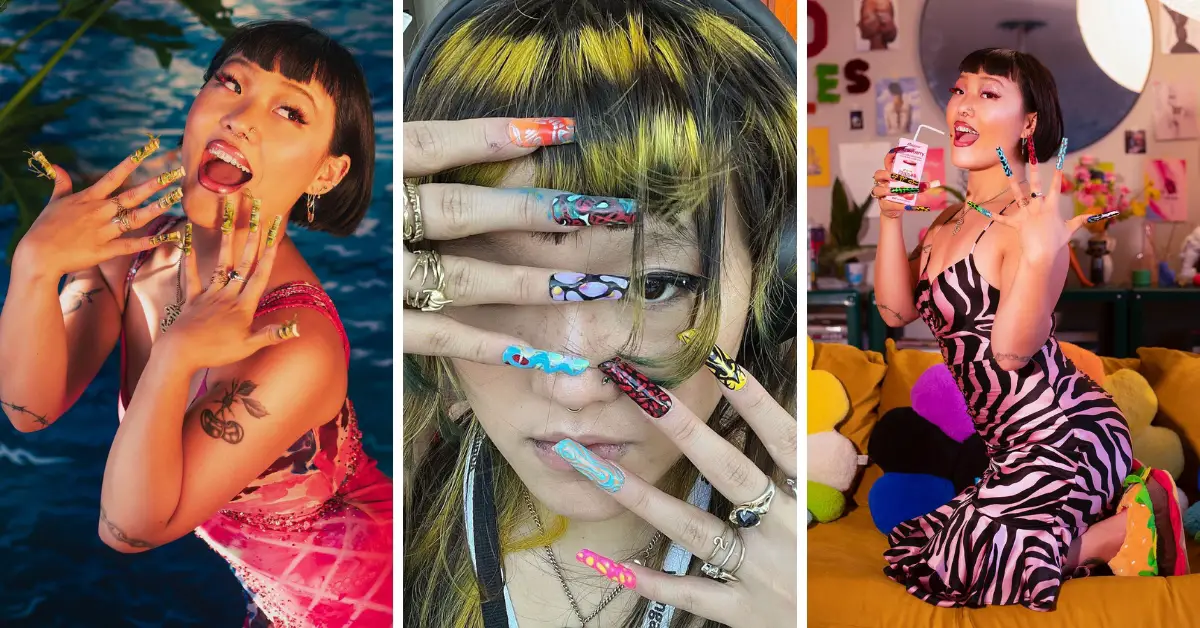
A manicure is supposed to be small.
Ten surfaces, a few inches of polish, gone in a fortnight.
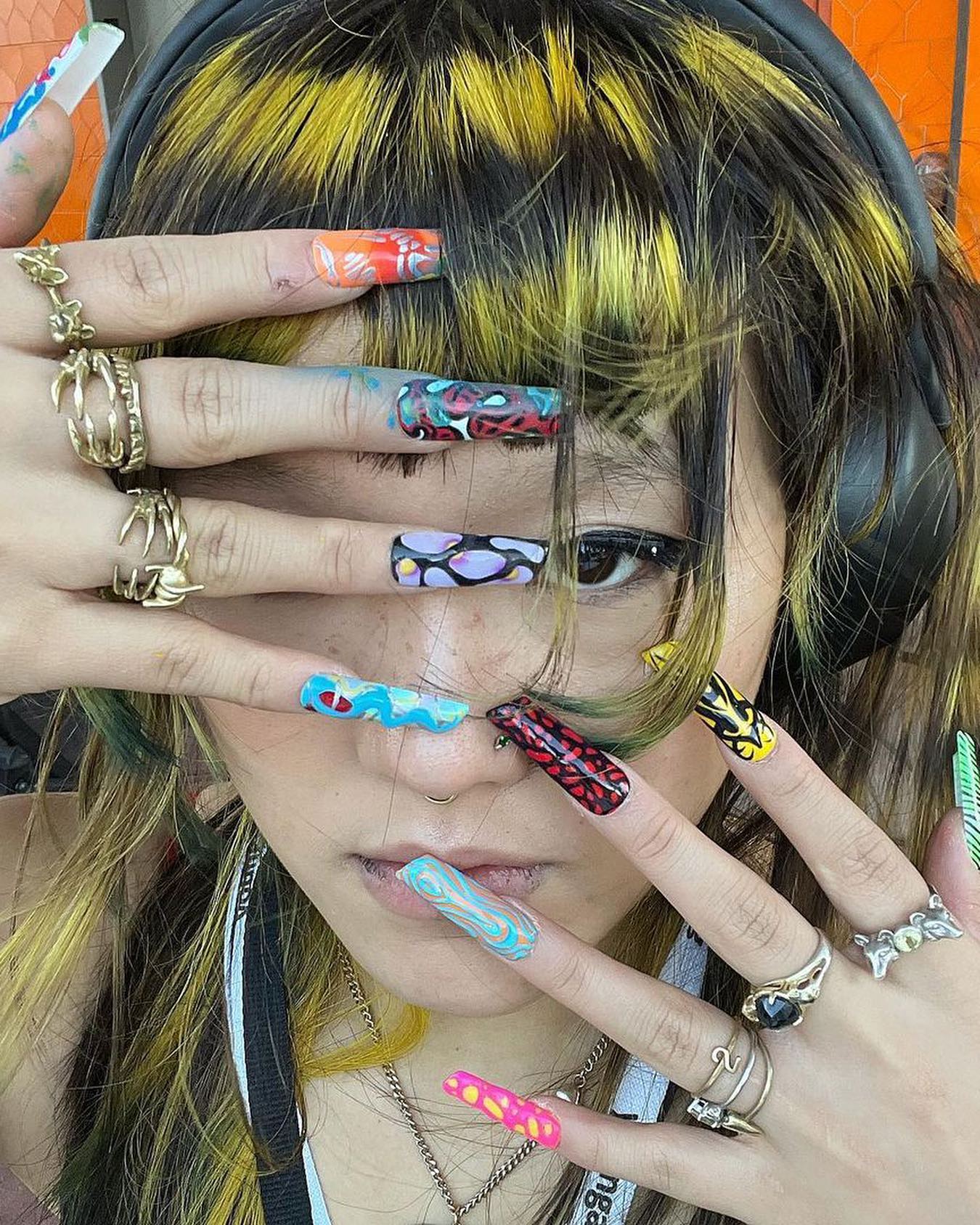
Ameya Marie Okamoto treats those few inches as a place to keep history.
The Japanese-Taiwanese-American artist, activist, and licensed nail technician builds tiny sculptural sets that carry the weight of identity, labor, and memory.
Her medium is not an accident.
Nail art in America is bound up with the immigrant women who built the industry, and Okamoto works inside that lineage on purpose.
Who Is Ameya Okamoto
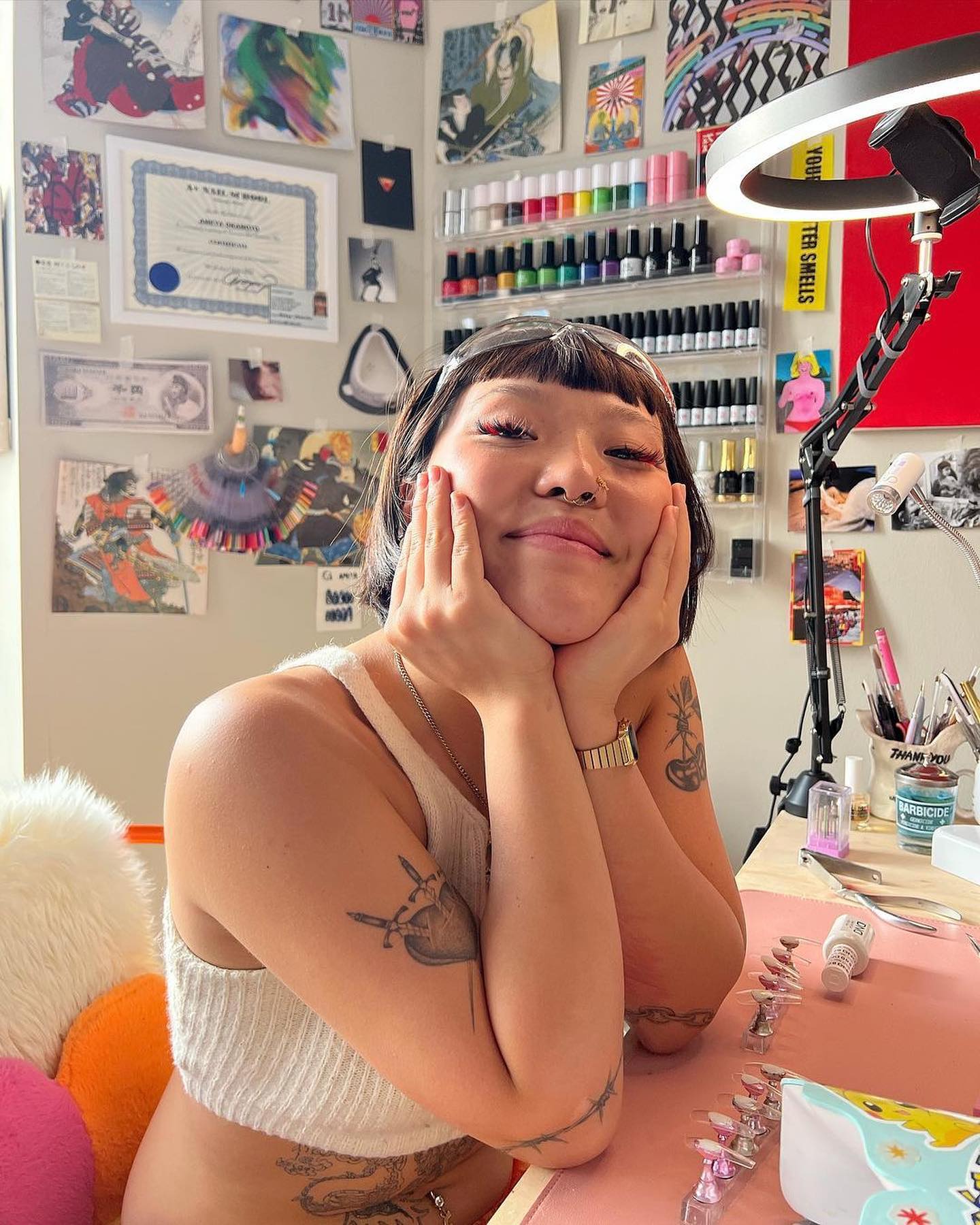
Born in 2000, Okamoto grew up asking the same question over and over.
Why do people do what they do, and who decides whose story gets told?
She trained at the School of the Art Institute of Chicago and now works out of Brooklyn, New York.
Her practice spans nails, ceramics, and painting, but it all circles back to one subject.
What it means to be Asian American, and how that experience has been written out of the record.
She is also the founder and creative director of IRRESISTIBLE, a social-justice arts collective that makes work for social change. The nails are her most public language.
The History Pressed Into Every Manicure
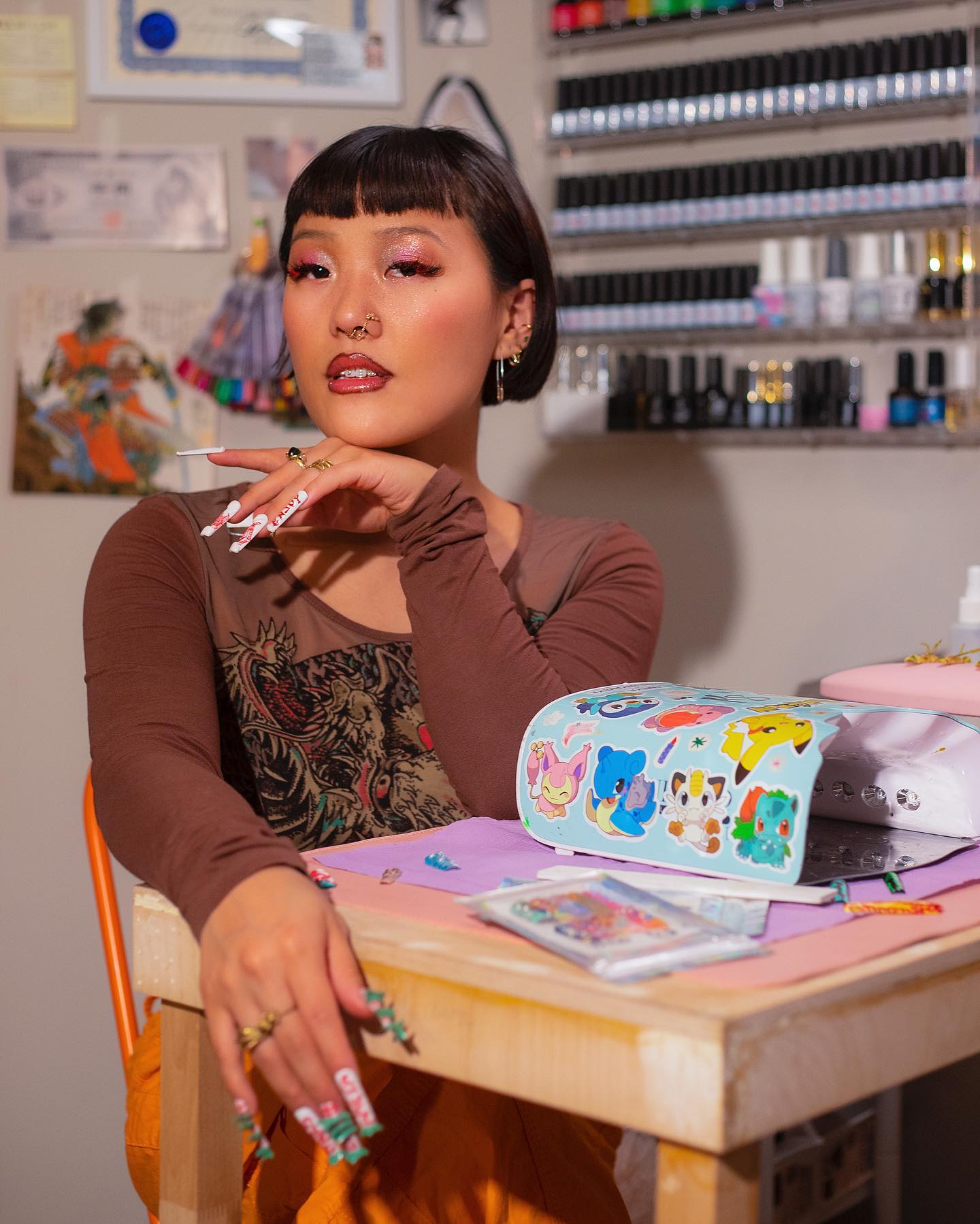
To understand why Okamoto chose this craft, it helps to know where the modern nail salon comes from.
Before 1975, there were almost no Asian-owned nail salons in the United States.
The industry as Americans know it today began in a refugee camp.
After the fall of Saigon, actress Tippi Hedren was volunteering as a relief coordinator at Hope Village, a camp in Northern California for Vietnamese women who had lost nearly everything.
The woman kept admiring her manicured nails.
So Hedren flew in her personal manicurist to teach a group of twenty refugees the trade.
She then helped them get licensed and placed in salons across Southern California.
That small act compounded.
Vietnamese Americans now make up roughly four in five of California’s licensed manicurists and close to half of all manicurists nationwide, anchoring an industry worth billions.
This is the history Okamoto sits inside.
When she examined a Vietnamese refugee nail technician’s tools at the Smithsonian, she was not looking at a museum curiosity.
She was looking at the foundation of her own craft.
From A Dorm Room To A Statement
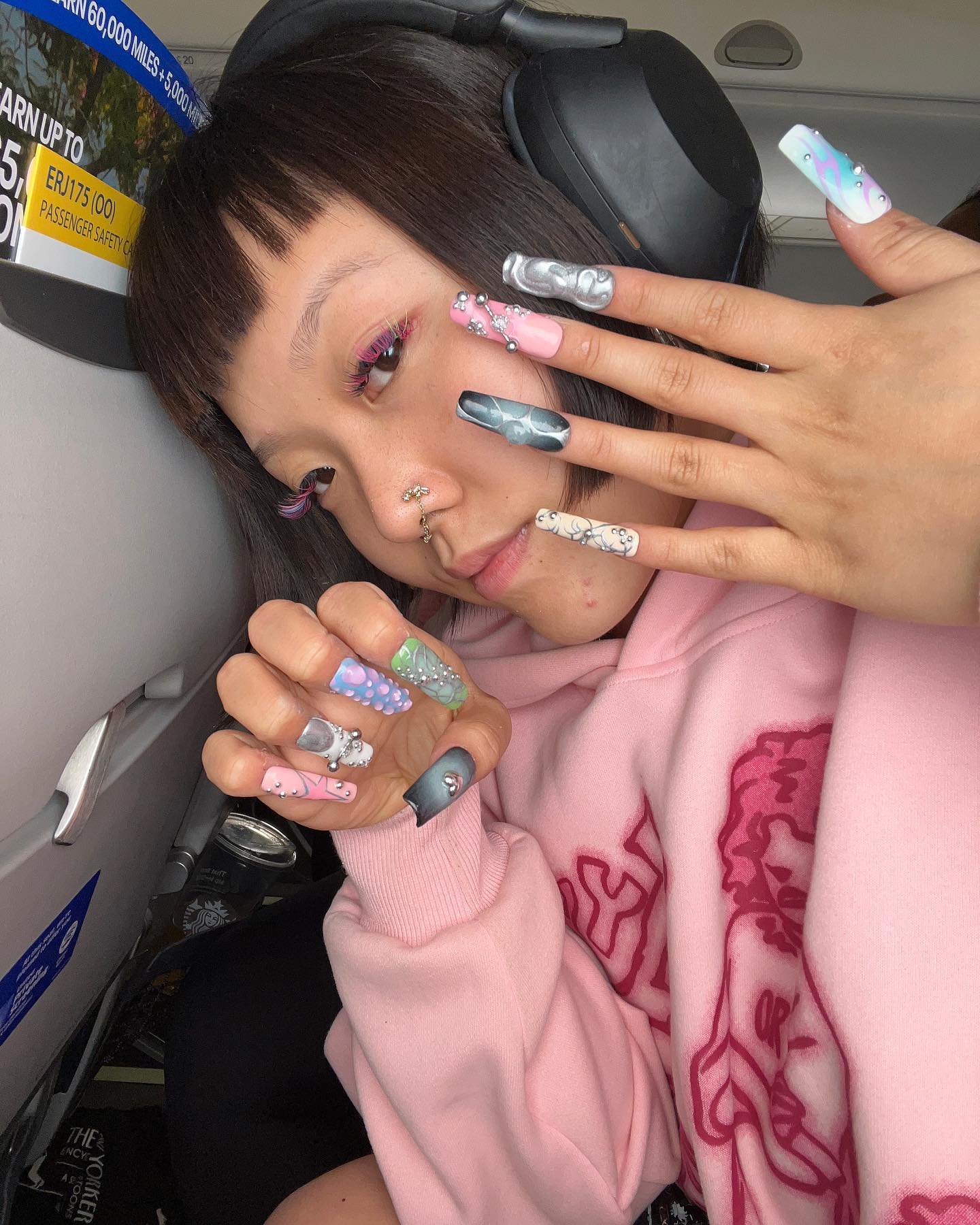
Okamoto did not arrive at any of this through a salon chair.
She started with press-on nails in her dorm room, saving cash until she could pay her own way through nail school.
When she posted her work online, it traveled fast.
Her hashtag, #nailsbyameya, has gathered more than 100 million views on TikTok, and that audience turned a side project into a working studio.
She runs it like a tattoo artist.
Clients send a mood board, she sketches a custom design on her iPad, and only then does the polish go on.
The result is closer to a commissioned sculpture than a beauty appointment.
Through that process, she keeps returning to hard themes. Identity. Social status. Exploitation.
The way forced migration changes how people see their own bodies.
She has spoken about how many Asian immigrants found their footing in service roles after arriving in America.
By making fine art out of service work, she refuses to let that labor be treated as invisible.
“Going Home Again” On The Rails

Okamoto’s most ambitious project took her out of the studio entirely.
In a summer series titled “Going Home Again,” she traveled across the United States by railroad to document stories of anti-Asian violence and discrimination that rarely reach a classroom.
The project connected more than 100,000 people to histories that span the wartime incarceration of Japanese Americans through the cultures of Vietnamese Americans since 1975.
She funded the first leg with a summer grant and shared the work on social media.
Families of victims reached out to thank her for keeping those memories alive, which she has called the most meaningful response of all.
Her long-term hope is bigger than a viral clip.
She wants to help design memorials that treat Asian American history as American history, full stop.
When Craft Becomes A Monument
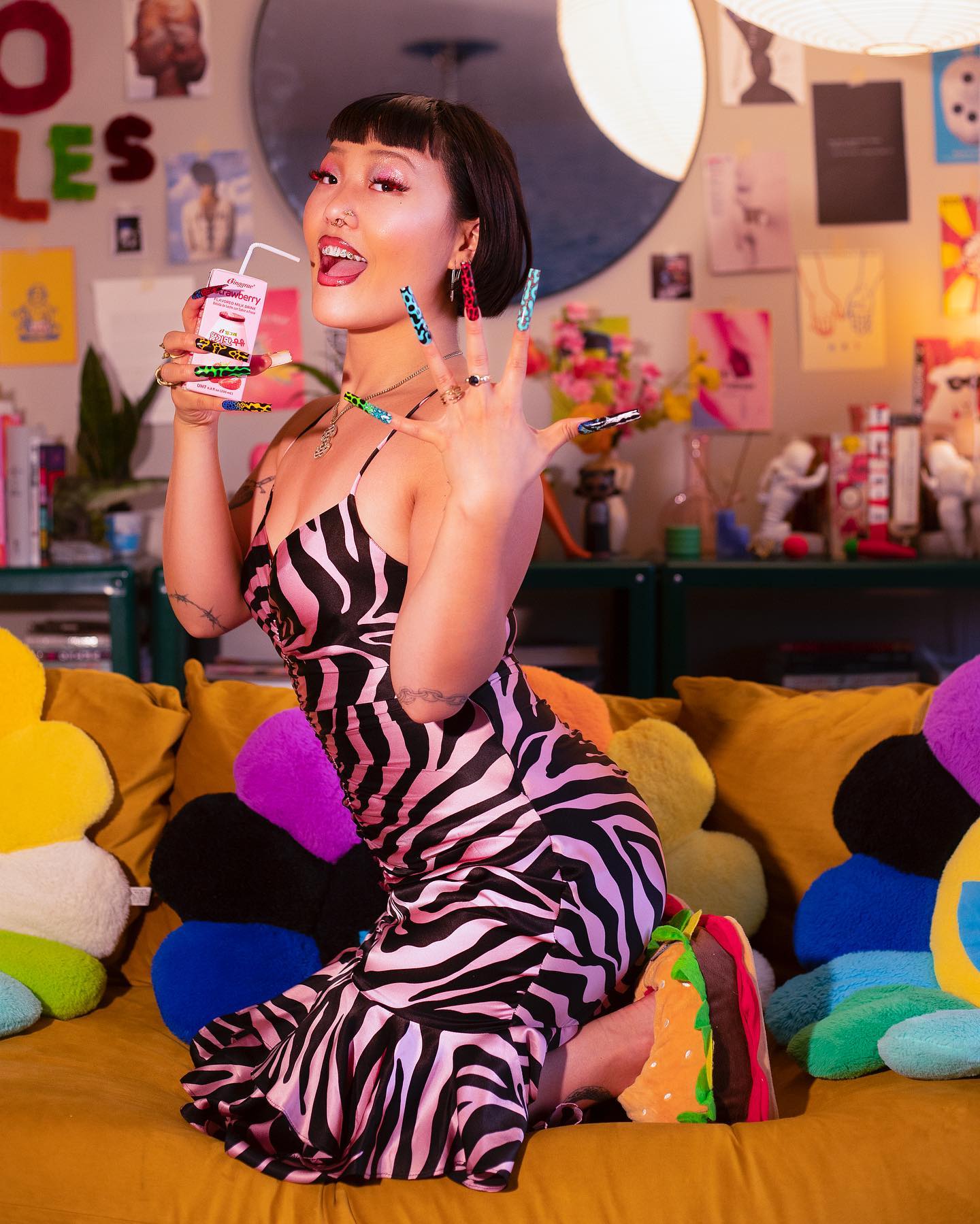
That instinct, to turn small things into lasting ones, defines her studio work too.
For the Smithsonian’s Nail Art Project, Okamoto designed a set inspired by the Friendship Archway in Washington, D.C.’s Chinatown.
She scaled the landmark down to fit a fingertip and spelled her own name in Chinese and Japanese across her thumbnails.
It is a fitting summary of her approach.
A public monument shrunk to something a person can wear, carry, and reclaim as their own.
Quick Fact
The Vietnamese American nail industry traces back to a single 1975 class of twenty refugee women. Today, that lineage supports a multibillion-dollar business, and it is the exact tradition Okamoto reinterprets as art.
Why It Matters

Representation is the thread that runs through all of it.
Okamoto often points to a quiet problem.
When you never see role models who look like you, it becomes harder to picture what you could become.
Her work tries to close that gap, both by teaching overlooked histories and by claiming space in galleries and museums that have rarely centered Asian American voices.
She is not asking nail art to carry more than it can.
She is showing that it was always carrying this much, and that someone finally decided to make it visible.
In her hands, a manicure stops being disposable.
It becomes a small, portable record of where her community has been and where it intends to go.
Enjoyed this story?
Follow THOUSIF Inc. – ONLINE for more in-depth profiles of the creators turning everyday craft into something worth remembering.
Post's Author