
Table Of Contents
In a fashion capital built on needle and thread, Rohan Mirza arrived with a laptop.
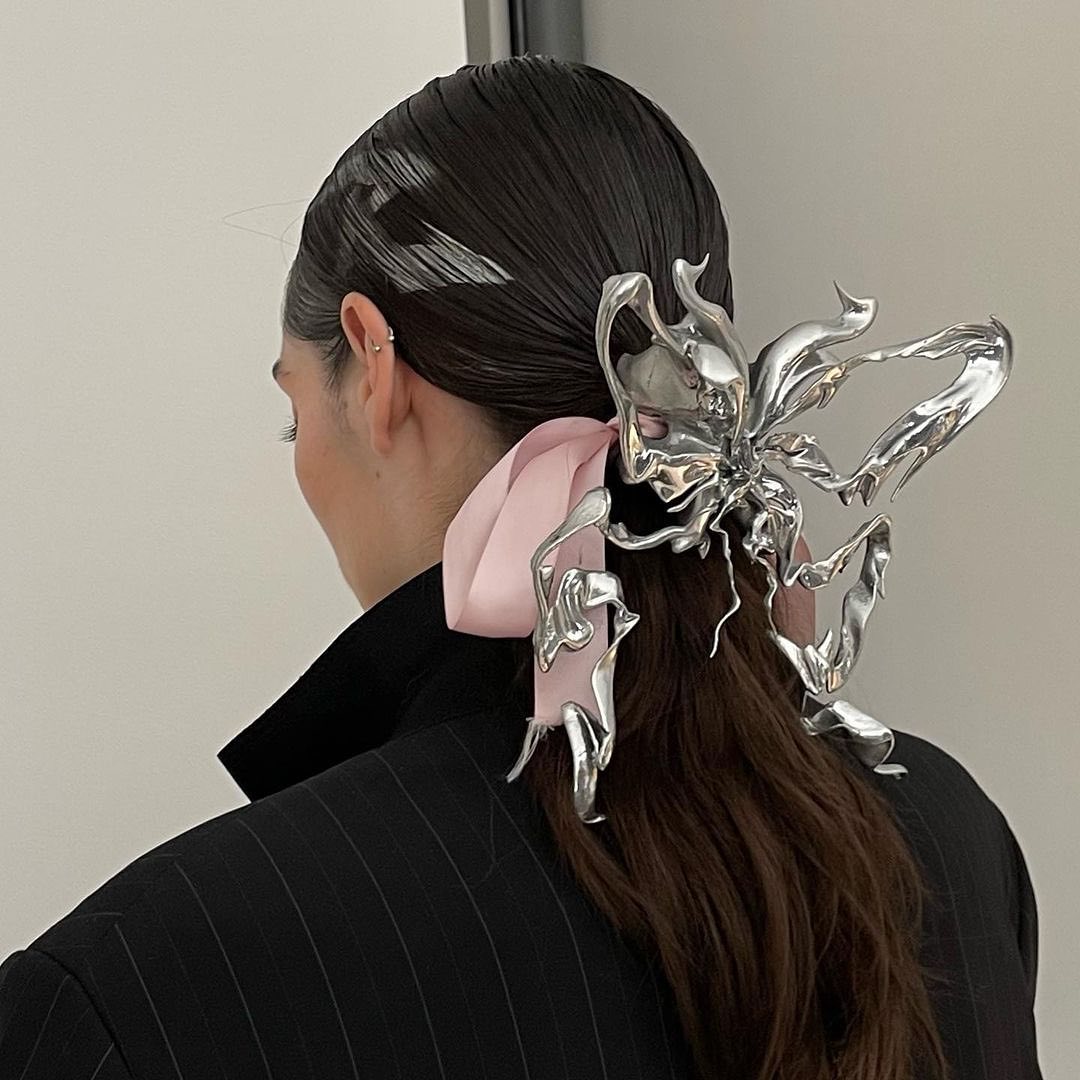
The Paris-based designer, known online as @marierohanaa, builds his clothes and accessories as digital models first, then prints them into real, wearable objects.
His work looks like it belongs in a science-fiction film, yet every piece is made to be worn.
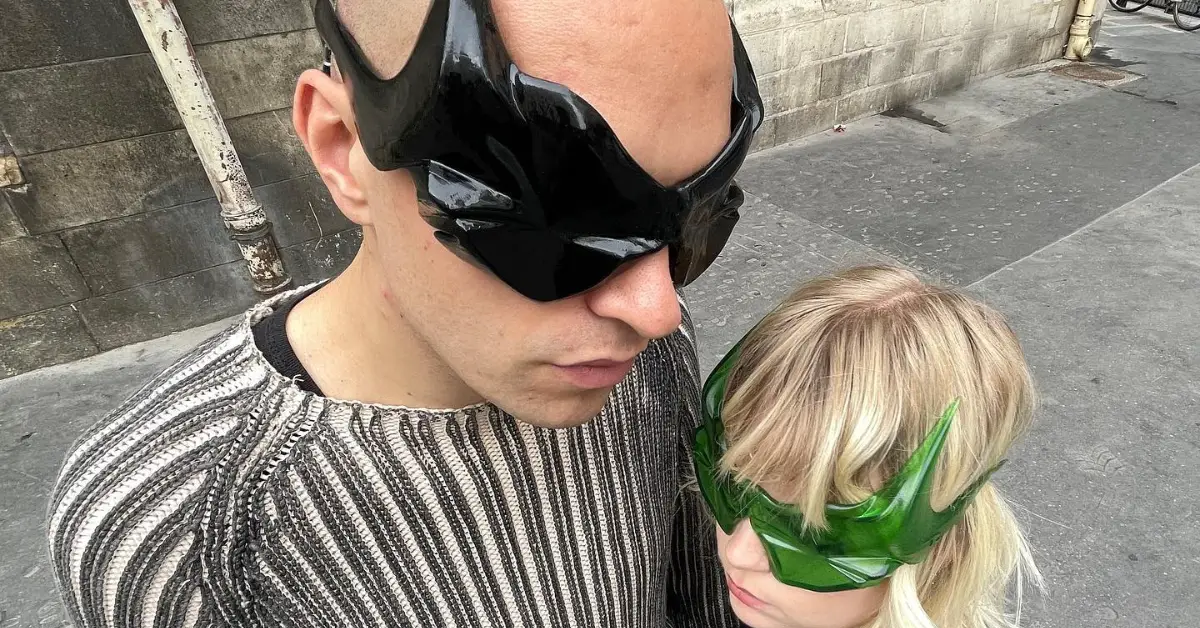
Spiked claws, insect-like eyewear, and armour that appears to have grown rather than been sewn have become his calling card.
This profile examines who Rohan Mirza is, how his process works, the people he has worked with, and why his rise matters for the future of fashion.
Who Is Rohan Mirza?
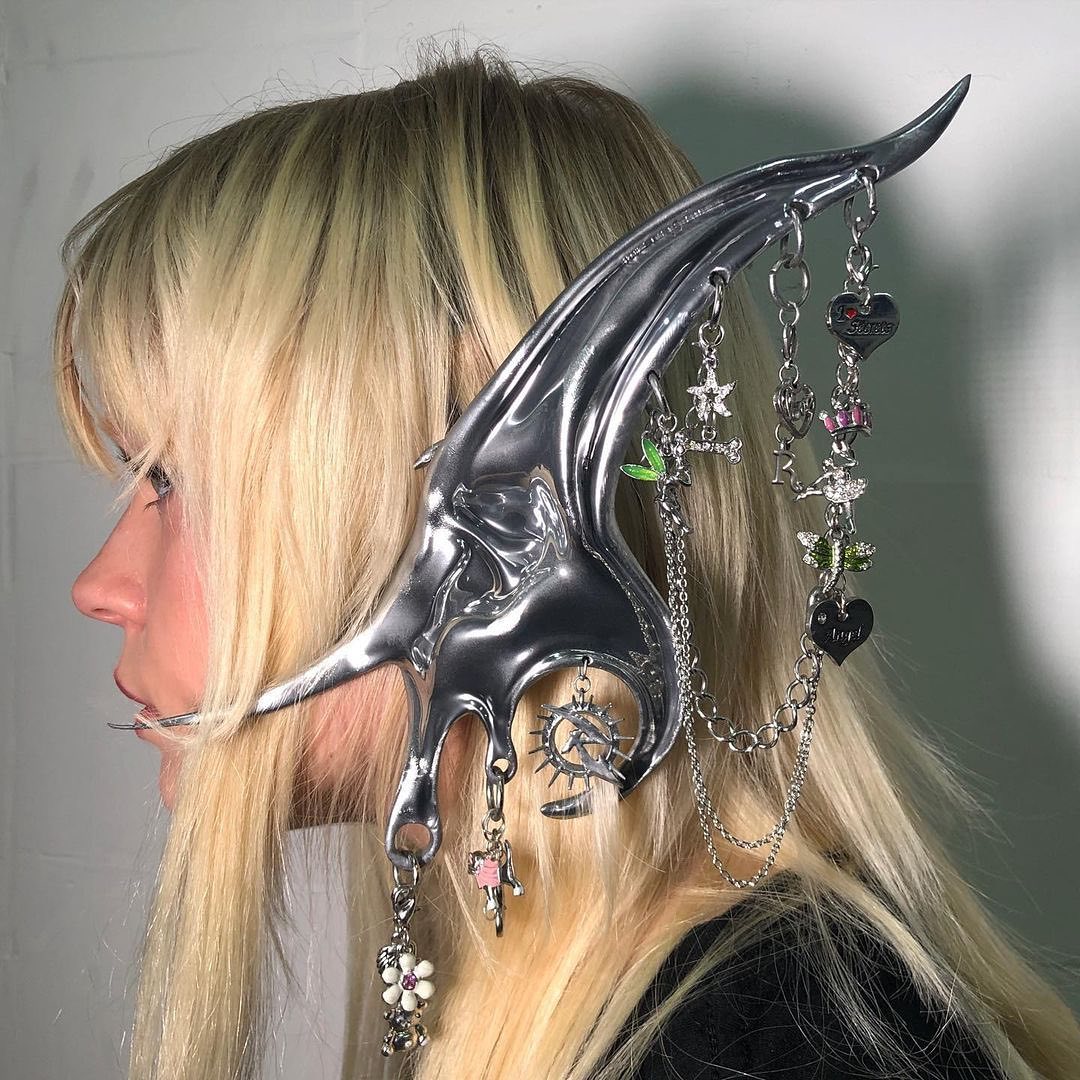
Rohan Mirza is a Paris-based 3D artist and fashion designer, now in his mid-twenties, who works under the studio name Rohan Mirza Studio (often shortened to RMS) and the handle @marierohanaa.
His speciality is wearable design made with 3D printing.
He rarely calls his pieces clothes.
Instead, he describes them as prosthetics or artefacts, because they reshape the body rather than cover it.
A pair of his glasses might curl like insect wings.
A necklace might resemble a fossil or an animal’s spine.
The aim is to make the wearer look like a mythological or half-machine creature, while keeping each piece light enough to wear comfortably.
His style brings together two worlds that rarely meet.
Soft, angelic, organic forms sit on one side.
Sharp, mechanical, cyberpunk edges sit on the other.
| Detail | Information |
|---|---|
| Name | Rohan Mirza |
| Known as | @marierohanaa (Marierohanaa) |
| Based in | Paris, France |
| Studio | Rohan Mirza Studio (RMS) |
| Field | 3D printed fashion, accessories, and jewelry |
| Trained at | École Duperré, Paris |
| Known for | Sci-fi prosthetic designs and the viral NUKETOWN collection |
From Nail Art To A Paris Studio
Mirza studied fashion design at École Duperré in Paris.
The school had 3D printers available, but it did not teach the craft in depth.
So he taught himself, largely during the COVID lockdowns.
By his own account, he was never the strongest at hand sewing.
Computers were where he felt at home, so he leaned into 3D software instead.
That decision became his signature.
His first breakthrough was small in scale.
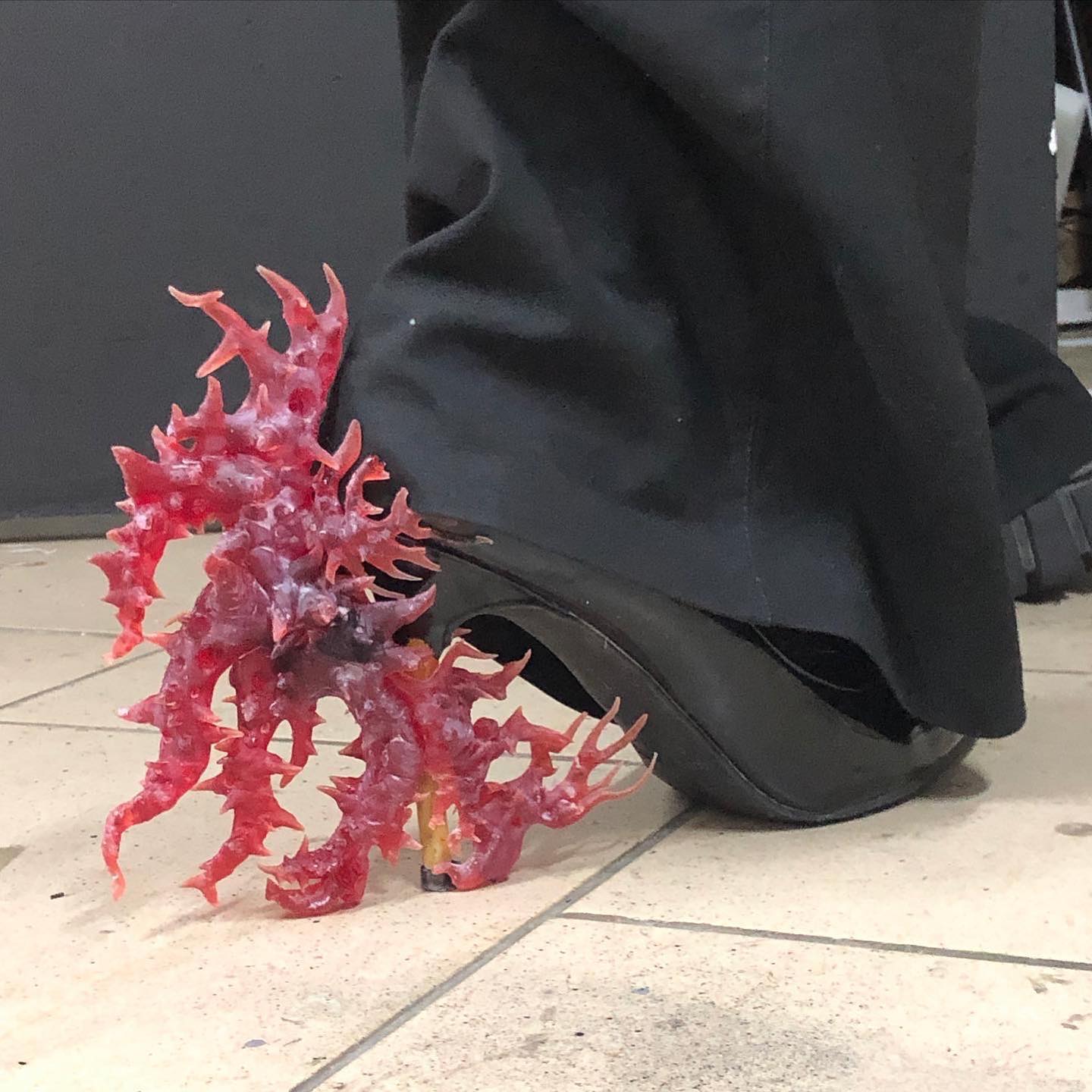
He began producing intricate 3D-printed nail art, which quickly caught the attention of figures in the Paris fashion scene.
From there, he expanded into eyewear, jewelry, and full accessories.
After graduating, he founded Rohan Mirza Studio and began sharing his genre-bending work online, where it quickly found an audience.
Inside His Design Process
The principle is straightforward.
He designs everything digitally, then prints it.
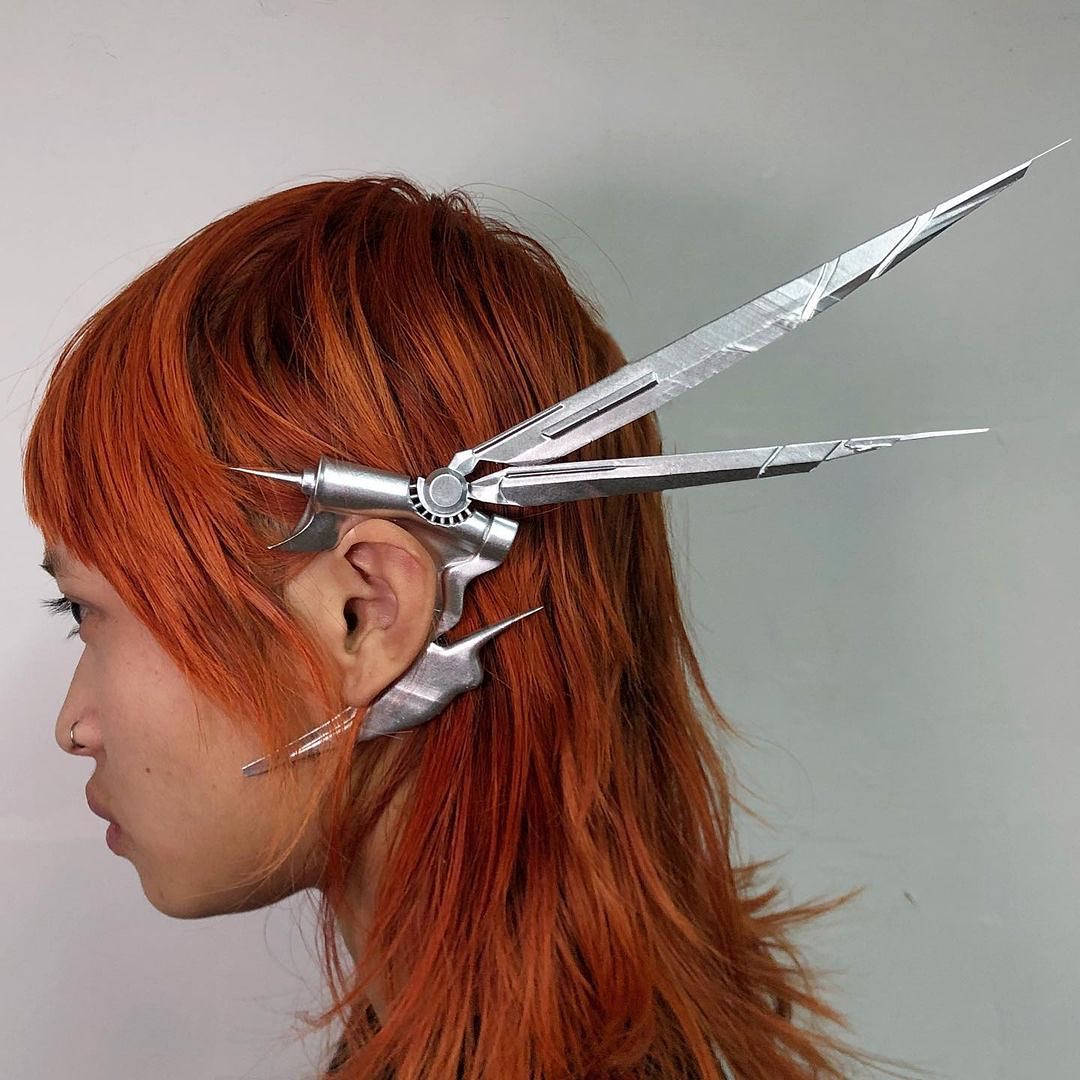
Mirza models his pieces in 3D software such as Blender, creating shapes on screen that would be almost impossible to cut and stitch by hand.
He then prints them on resin and filament 3D printers in his Paris studio, before sanding, gluing, and painting each piece to finish it.
A short note on the terms. 3D printing builds a solid object layer by layer from a digital file, guided entirely by a computer.
For his most advanced work, he uses an industrial method called Multi Jet Fusion, or MJF, which produces smooth, strong, stone-like surfaces.
That finish is the point.
His printed pieces can look so natural that people assume they are carved stone, metal, or leather.
Visitors who see the work in person are often surprised to learn it came out of a printer at all.
Major Collaborations
Mirza is still young, yet his list of clients and collaborators already spans both fashion and music.
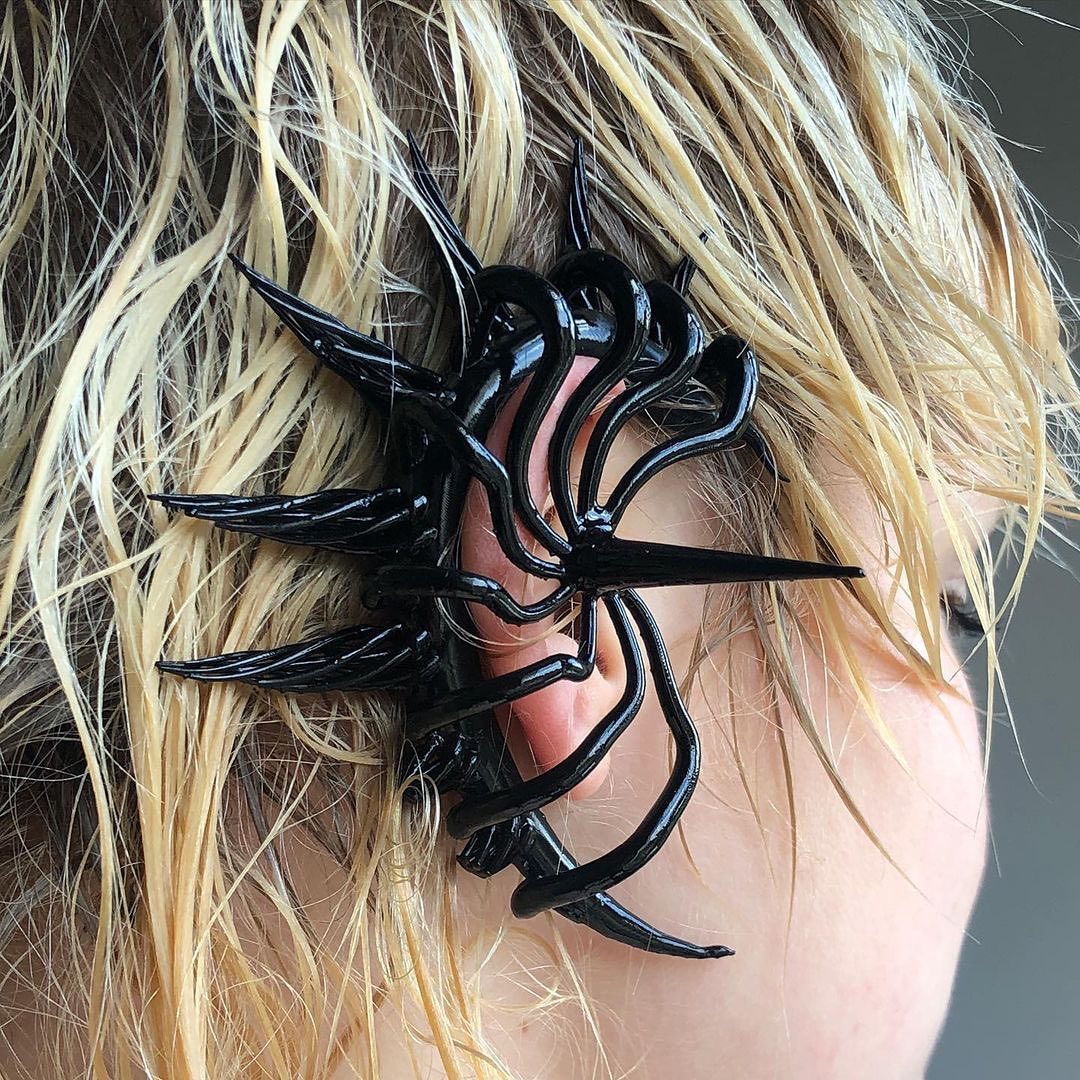
He created 3D-printed claws for a Jean Paul Gaultier campaign and has carried out prototype work for houses, including Mugler.
His pieces have also been worn by and made for high-profile figures such as Beyoncé, Bella Hadid, Quavo, and Grimes.
The table below summarises some of his standout works.
| Collaboration | What He Did |
|---|---|
| Jean Paul Gaultier | Designed and 3D-printed claws for a house campaign |
| Mugler | Created a 3D-printed handbag prototype |
| Sculpteo | Built a 3D-printed armour piece for Paris Fashion Week |
| Music and celebrity figures | Pieces worn by names such as Beyoncé, Bella Hadid, Quavo, and Grimes |
NUKETOWN: Where Fashion Meets Gaming
If one project introduced Mirza to a wider audience, it was his Spring/Summer 2025 collection, NUKETOWN.
The collection commits fully to gaming and cyberpunk culture.
It features armoured silhouettes, oversized Monster Boots, and pieces that resemble gear from a futuristic video game.
When it appeared online, it went viral almost overnight.
Gaming is not a passing reference for Mirza.
It runs through his work, and it even shapes the way he names his collections.
Trivia: NUKETOWN is named after a well-known map in the Call of Duty video game series. Naming collections after Call of Duty maps has become a quiet signature for Mirza, a nod to the gaming world that fuels his imagination.
The Paris Fashion Week Armour
One of his most discussed recent pieces is a 3D-printed suit of armour, produced with the printing company Sculpteo and shown at Paris Fashion Week in 2025.
For the project, he partnered with tattoo artist Bravo Chouchou, whose manga-inspired style mixes cute and darker themes.
Her artwork was reworked into the armour’s surface patterns, turning it into a wearable sculpture.
The design drew on the Japanese musician Reita, known for always covering his nose with a strip of fabric.
Mirza and his team used that idea to explore concealment and identity, deliberately hiding the nose to create an unfamiliar and striking effect.
The MJF printing gave the armour a dense, earthy, stone-like texture.
The result was convincing enough that many who saw it could hardly believe it had been 3D printed.
Why Rohan Mirza Matters
Mirza belongs to a new generation of Paris designers who grew up online, shaped by video games, internet culture, and digital tools rather than traditional ateliers.
His story carries a wider lesson for anyone watching fashion.
A designer no longer needs decades of hand-sewing skill or a major house behind them to create work that turns heads.
A laptop, the right software, and a clear creative vision can be enough.
His practice also sits at the centre of a question the industry keeps returning to.
Where does the digital end and the physical begin? Mirza’s answer is to refuse the divide.
He treats the screen and the real world as a single, continuous space.
In particular, his 3D-printed pieces are evidence that the technology has matured. What once looked rough and plastic can now stand alongside couture.
Final Thoughts
Rohan Mirza is doing something easy to describe and difficult to achieve. He is making the future wearable.
From self-taught nail art to Paris Fashion Week armour, his journey shows what becomes possible when curiosity, technology, and a clear vision meet in one person.
We will be watching where he goes next.
If profiles like this one interest you, there is plenty more to explore on THOUSIF Inc. – ONLINE.
Browse our other Creators features and celebrity profiles, and tell us which artist we should cover next.
Frequently Asked Questions
Who is Rohan Mirza?
Rohan Mirza is a Paris-based 3D artist and fashion designer, known online as @marierohanaa, who creates wearable designs using 3D printing.
What is Rohan Mirza known for?
He is known for futuristic, sci-fi-inspired accessories and clothing that he describes as prosthetics, including spiked claws and sculptural eyewear, and for his viral NUKETOWN collection.
How does he make his designs?
He models each piece digitally in software such as Blender, then prints it with resin, filament, or an industrial MJF 3D printer, and finishes every item by hand.
Which brands and stars has he worked with?
He has created work for Jean Paul Gaultier, prototyped for Mugler, collaborated with Sculpteo for Paris Fashion Week, and made pieces worn by stars such as Beyoncé, Bella Hadid, Quavo, and Grimes.
Post's Author